 quiet
quiet 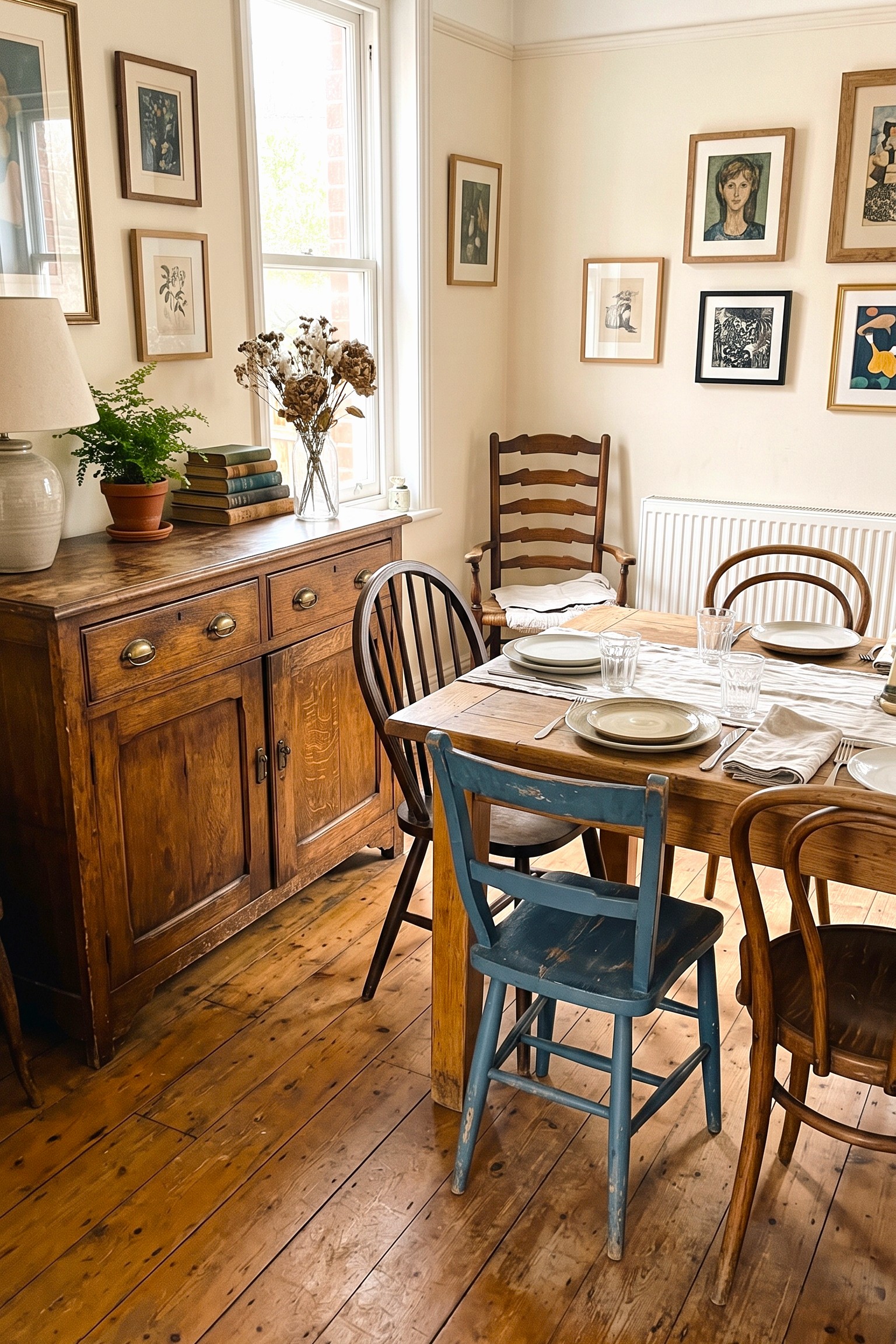
New furniture is often built to a price point. Older pieces, especially solid wood case goods and well-made frames, were frequently built to last — which is why secondhand can mean better, not just cheaper. The instinct to buy everything new, all at once, usually works against both your budget and the quality of what ends up in the room.
Wood case goods
Dressers, sideboards, and bookcases from decades ago are often solid wood construction, something rare at accessible new price points today. A little refinishing goes a long way — a stripped and re-oiled top, or new hardware, can make a forty-year-old piece look more considered than something bought last week. Look for dovetail joints and solid backs as signs of real construction quality.
Dining chairs
Mismatched vintage chairs around one table is a look that reads intentional, and individual chairs are far cheaper to source secondhand than a matching new set. This is also one of the lowest-risk places to experiment — a chair that doesn't work can be resold for close to what you paid, unlike a full new dining set.
Lighting fixtures
Vintage brass and glass fixtures were often made with a level of detail that's expensive to replicate new. As long as the wiring is inspected and, if needed, replaced by someone qualified, an older fixture is frequently a better-made object for less money than its modern equivalent.
What to still buy new
Mattresses and anything upholstery-heavy without a known history — comfort and hygiene concerns make these worth buying fresh. The general rule: buy secondhand where craftsmanship and materials matter most and use is visible, buy new where cleanliness and support matter most and use is invisible.
Where to actually look
Estate sales and local auction houses tend to have better prices and less competition than online marketplaces, though they take more patience. Facebook Marketplace and local classifieds are faster but require checking construction quality yourself before buying, since there's rarely a return policy once a heavy piece is in your car.